When a Skin Symptom Deserves a Real Answer: The Search-First Habit That Can Cost You Time
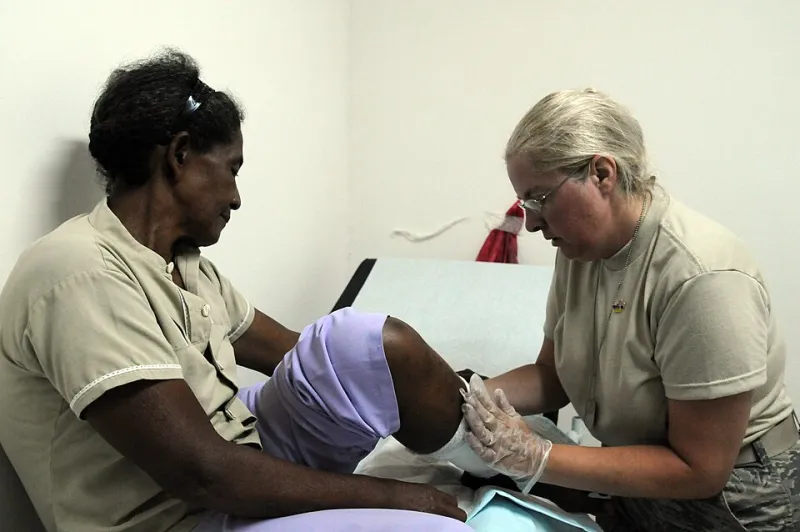
Photo: Petty Officer 1st Class Emmitt Hawks Jr., Public domain, via Wikimedia Commons
It starts the same way for nearly everyone: a strange patch, a new spot, a rash that will not quit. Within minutes, a phone is out, a search engine is open, and a symptom that took seconds to notice becomes a spiral of worst-case scenarios — or, just as dangerously, false reassurance.
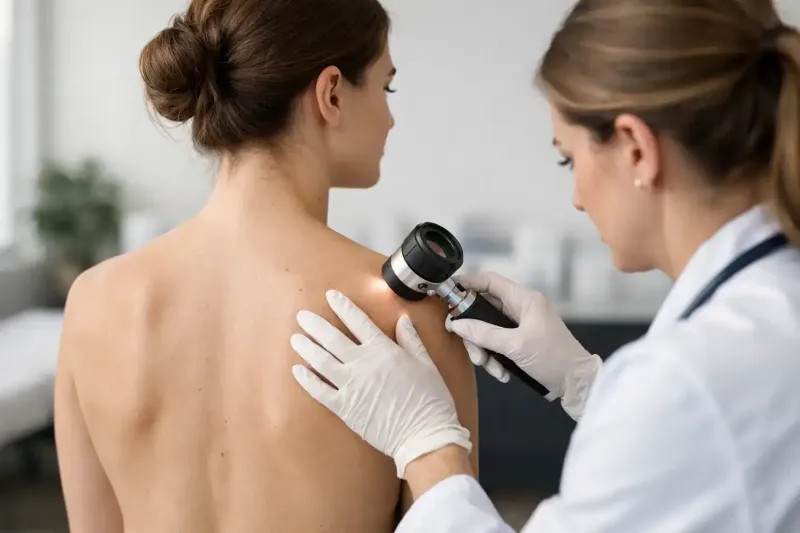
Board-certified dermatologists see the consequences of this habit every day. While online tools and telehealth platforms have made health information more accessible than ever, they have not replaced the trained eye, the dermatoscope, and the clinical judgment that come with years of specialized medical education.
Why Self-Diagnosis So Often Misses the Mark
The skin is the body's largest organ, and it is an unreliable narrator. The same underlying condition can look dramatically different on different skin tones, ages, and body sites. A dark patch on the shin might be nothing more than a healed injury — or an early sign of a serious problem that only a trained examination can distinguish.
Search algorithms, meanwhile, are built to surface popular content, not accurate diagnoses. Studies of symptom checkers have repeatedly found high rates of both false alarms and missed conditions. AI-based skin apps, however sophisticated, are not regulated as diagnostic devices in the United States and cannot account for a patient's full medical history, medications, or family history of skin cancer.
"The most dangerous search result is the one that tells you to wait and see," note dermatologists who treat advanced skin cancers referred too late for easy treatment.
Seven Skin Changes That Warrant a Professional Look
1. A mole that is changing. Any mole that grows, shifts in color, develops an irregular border, or bleeds should be evaluated promptly. Change is the single most important warning sign for melanoma, and no photograph comparison online can substitute for dermoscopic examination.
2. A rash that persists beyond two weeks. Rashes are among the most searched symptoms in America, and among the hardest to self-diagnose. Eczema, psoriasis, allergic contact dermatitis, and fungal infections can overlap in appearance, but their treatments differ substantially.
3. A sore that will not heal. Any wound, especially on sun-exposed skin like the ears, face, scalp, or lower legs, that remains open after several weeks deserves evaluation. Non-healing sores are a classic presentation of skin cancer.
4. New growths after age 30. While new moles are common in childhood and early adulthood, a brand-new spot appearing later in life warrants a closer look.
5. Sudden, widespread changes. Flushing, new bruising, yellowing, or dramatic changes in skin texture can signal systemic conditions affecting the liver, blood, or hormones — not just the skin itself.
6. Acne that resists over-the-counter treatment. Persistent acne is not merely cosmetic. Untreated, it can cause permanent scarring and significant psychological distress, and effective prescription options exist.
7. Any spot that bleeds, itches, or hurts without explanation. A lesion that behaves differently from everything else on your skin — the so-called "ugly duckling" — should never be dismissed based on an internet search.
Telehealth and AI Tools: Useful Adjuncts, Not Replacements
The rise of teledermatology during and after the COVID-19 pandemic expanded access for patients in rural areas and those facing dermatologist shortages. These platforms have genuine value: a board-certified dermatologist reviewing images can triage urgent cases and manage some conditions remotely.
The distinction is expertise. A telehealth visit connects a patient to a licensed physician with specialized training. A consumer skin-check app, by contrast, offers pattern-matching without accountability. Consumers should be wary of any tool that promises a definitive diagnosis from a photograph alone.
A Practical Rule for the Same-Week Call
Not every skin concern is an emergency, but certain situations justify a same-week appointment: a rapidly changing mole, a spot that is bleeding or painful, a rash accompanied by fever, or any lesion that appeared suddenly and is growing quickly. When in doubt, calling a dermatologist's office costs nothing — and the scheduling staff can help determine the appropriate urgency.
Early detection matters most in skin cancer, where lesions caught in their earliest stages are almost always curable with minor in-office procedures. Waiting months to "see if it goes away" can transform a simple excision into a far more involved treatment.
The internet is a fine place to learn what a dermatologist does. It is a poor place to find out what is happening on your skin. For that, trust the trained eye.