Hormones, Deadlines, and Breakouts: Making Sense of Acne After 30
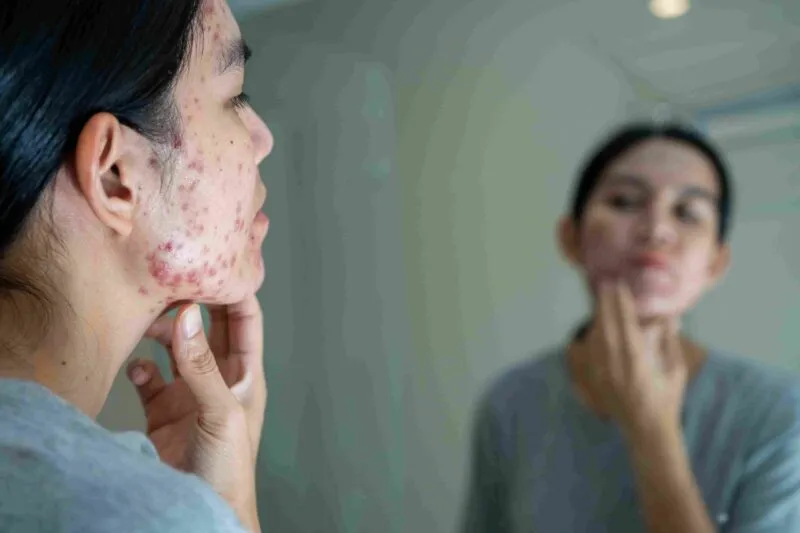
Photo: woman 40s examining jawline acne in bathroom mirror dermatology, via henry-health.com
For many Americans, acne feels like a closed chapter — something survived alongside prom photos and learner's permits. So when inflamed pimples appear along the jawline at age 36, or deep cysts surface the week of a major work presentation at 44, the reaction is often confusion followed by a trip to the drugstore aisle for the strongest benzoyl peroxide wash available.
That instinct, dermatologists say, is frequently counterproductive. Adult acne is a distinct clinical problem with distinct triggers, and it responds best to a different playbook.
Why Adult Skin Breaks Out Differently
Adolescent acne is driven largely by surging androgens stimulating oil production across the face, chest, and back. Adult acne tends to be more localized — most often along the lower face, chin, and jawline — and more closely tied to hormonal fluctuations that persist or intensify in the third and fourth decades of life.
Several factors converge in this age group:
- Hormonal shifts. Fluctuations in estrogen and relative androgen dominance can occur with menstrual cycles, pregnancy, postpartum changes, perimenopause, or discontinuation of hormonal contraceptives.
- Chronic stress. Cortisol elevations associated with sustained workplace or caregiving stress can influence sebaceous gland activity and inflammation.
- Comedogenic exposure. Hair products, cosmetics, masks, and even workout gear contribute to follicular blockage in adults who may not suspect them.
- Underlying conditions. In some patients, adult acne — particularly when accompanied by irregular cycles, hair thinning, or excess facial hair — signals polycystic ovary syndrome or another endocrine disorder that warrants medical evaluation.
The Over-Drying Trap
The most common self-inflicted wound dermatologists observe is aggressive treatment with products formulated for teenage skin: harsh scrubs, high-concentration benzoyl peroxide, and alcohol-heavy astringents used daily. Adult skin, which has already begun losing moisture retention and resilience, frequently responds with irritation, redness, and a compromised skin barrier — sometimes producing more oil in compensation.
The result is skin that is simultaneously dry, inflamed, and still breaking out. A gentler foundation — a mild cleanser, a non-comedogenic moisturizer, and daily broad-spectrum sunscreen — is not a step backward from treatment. It is the platform that makes treatment tolerable.
A Dermatologist-Guided Treatment Sequence
Evidence-based management of adult acne generally follows a stepped approach:
Step 1: Topical retinoids. Prescription-strength adapalene or tazarotene addresses comedones and post-inflammatory discoloration, and remains the backbone of therapy for most adults. Over-the-counter adapalene 0.1% is a reasonable entry point for mild disease.
Step 2: Combination therapy. For inflammatory lesions, dermatologists often pair a retinoid with a topical antimicrobial such as benzoyl peroxide or clindamycin — used at lower concentrations and frequencies than teen regimens to protect the barrier.
Step 3: Hormonal evaluation and systemic options. Women with jawline-predominant, cycle-linked acne may benefit from combined oral contraceptives or spironolactone, both supported by substantial clinical evidence. Persistent nodulocystic disease may warrant oral isotretinoin under close supervision.
Step 4: In-office procedures. For select patients, light-based therapies, chemical peels, and corticosteroid injection of isolated cysts complement medical therapy.
When to Stop Guessing
Any adult whose breakouts are painful, scarring, unresponsive to two to three months of consistent over-the-counter care, or accompanied by signs of hormonal imbalance should schedule an evaluation with a board-certified dermatologist. Early escalation prevents scarring — a consequence far harder to reverse than the acne itself.
Adult acne is common, treatable, and not a reflection of hygiene or willpower. The sooner the treatment matches the biology, the sooner the skin settles.