Before 50 and Already at Risk? The Quiet Rise of Early-Onset Skin Cancer in America
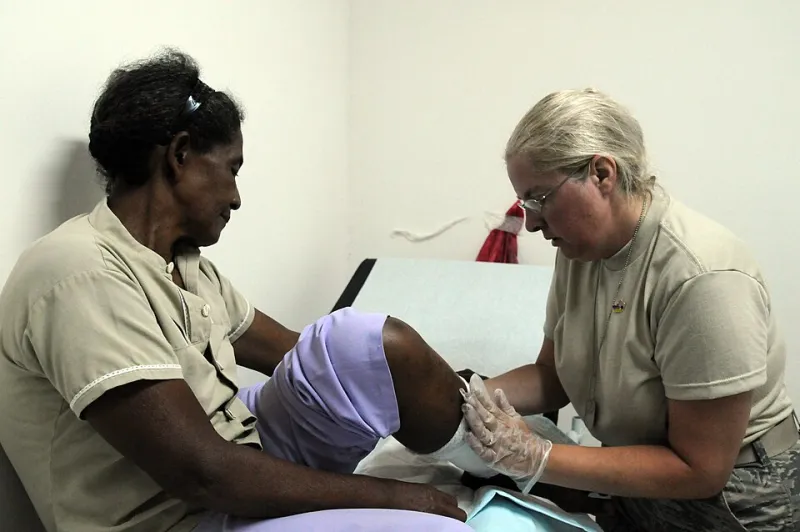
Photo: Petty Officer 1st Class Emmitt Hawks Jr., Public domain, via Wikimedia Commons
For decades, skin cancer was framed as a condition of accumulated sun damage — something that surfaced in retirement years after a lifetime of exposure. That framing no longer matches reality. Dermatology practices across the United States are diagnosing melanoma and basal cell carcinoma in patients in their twenties, thirties, and forties at rates that have prompted researchers to rethink when prevention and screening should begin.
The Numbers Behind the Trend
Melanoma remains one of the most common cancers diagnosed in young adults in the US, and it is among the leading cancer diagnoses in Americans between ages 25 and 29. While overall melanoma incidence has stabilized in some older demographics, cases in adults under 50 have continued to climb, particularly among young women. Basal cell carcinoma, historically rare before middle age, is increasingly identified in patients in their thirties.
Several forces drive this shift. Indoor tanning remains a significant contributor: research consistently links tanning bed use before age 35 to a substantially elevated lifetime melanoma risk. Although all 50 states now restrict indoor tanning for minors to varying degrees, millions of Americans who used tanning beds in the 1990s and 2000s are now entering the age range where that damage can convert to visible disease.
Genetics also plays a role that public awareness campaigns often understate. A first-degree family history of melanoma, red hair, fair skin that freckles or burns easily, a high mole count, or the presence of atypical moles all multiply risk independent of sun behavior. A patient who never visited a tanning salon can still carry meaningful risk.
What Screening Should Look Like, Decade by Decade
There is no single screening schedule that fits everyone, but dermatologists generally recommend the following framework, adjusted for personal and family history:
In your 20s: Establish a baseline. If you have more than 50 moles, atypical moles, a family history of melanoma, or a history of tanning bed use, an annual professional skin exam is warranted. Everyone in this decade should learn monthly self-examination using the ABCDE criteria — asymmetry, border irregularity, color variation, diameter larger than 6 millimeters, and evolving appearance.
In your 30s: Annual professional exams become advisable for most patients, particularly those with any of the risk factors above. This is also the decade when early basal cell and squamous cell lesions may first appear, often on high-exposure areas like the nose, ears, and forearms.
In your 40s and 50s: Annual exams are recommended for most adults, with some dermatologists advising twice-yearly visits for patients with a personal history of skin cancer, significant sun damage, or immunosuppression.
The Warning Signs Patients Routinely Miss
Melanoma does not always announce itself as an irregular black mole. Nodular melanoma, a faster-growing subtype, may appear as a firm, pink or flesh-colored bump. Acral lentiginous melanoma — the subtype disproportionately affecting people with darker skin — develops on palms, soles, and under nail beds, where patients rarely think to look. A pigmented streak on a fingernail, a sore that heals and reopens, or a spot that simply looks different from every other mole on your body (the "ugly duckling" sign) all merit prompt evaluation.
Where Diagnostic Technology Is Heading
The evaluation itself has evolved. Dermoscopy — examination of lesions under magnification and specialized lighting — has become standard of care, and AI-assisted dermoscopy tools are now being integrated into practice. These algorithms, trained on tens of thousands of lesion images, can flag subtle patterns invisible to the naked eye. Importantly, they function as decision support rather than replacement: a board-certified dermatologist weighs the technology's output alongside clinical history, physical examination, and, when indicated, a biopsy.
Reflected-light confocal microscopy, which images living skin at cellular resolution without cutting, is expanding at academic centers and may reduce the number of biopsies needed for ambiguous lesions.
The Bottom Line
Skin cancer under 50 is not a curiosity — it is a growing public health pattern with identifiable causes and effective countermeasures. Daily broad-spectrum sunscreen use, avoidance of tanning beds, and age-appropriate professional screening form the core of prevention. If a mole is changing, bleeding, or simply stands out from its neighbors, do not wait for your next scheduled visit. Early detection remains the single most powerful determinant of outcome in melanoma, and at every age, it begins with someone paying attention.