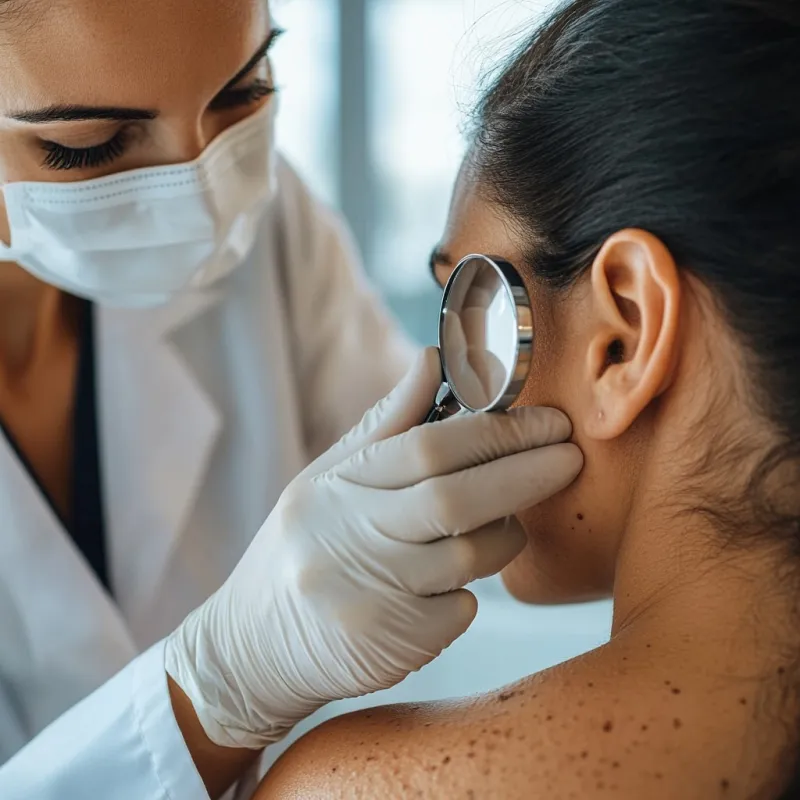
The Body Keeps Score: How Chronic Stress Surfaces on the Skin — and When to Seek Care

Patients rarely schedule a dermatology appointment and say, "I'm under too much stress." Instead, they describe clumps of hair in the shower drain, plaques that have crept onto their elbows for the first time in years, or an irresistible urge to pick at the skin around their thumbnails. Board-certified dermatologists, however, have learned to hear what these symptoms are actually saying.
The skin and the nervous system develop from the same embryonic tissue, and they remain in constant conversation throughout life. When stress becomes chronic — a contentious custody battle, a caregiver's unrelenting schedule, the months after a layoff — that conversation turns audible in ways patients can see and feel.
The Cortisol Connection
The pathway is well mapped. Psychological stress activates the hypothalamic-pituitary-adrenal (HPA) axis, prompting the adrenal glands to release cortisol. In short bursts, cortisol is anti-inflammatory and helpful. Sustained elevation is another matter: it disrupts the skin barrier's ability to retain moisture, slows wound healing, suppresses local immune function, and alters the hair follicle's growth cycle.
Cortisol is only part of the story. Stress also triggers the release of neuropeptides such as substance P, which can degranulate mast cells — the same cells responsible for allergic reactions. The result is itching, flushing, and inflammation without any allergen at all.
Four Ways Stress Commonly Presents
Flares of inflammatory disease. Psoriasis, eczema (atopic dermatitis), and rosacea all tend to worsen during periods of prolonged emotional strain. Dermatologists often hear the same timeline: the flare began weeks after the funeral, the moving truck, or the hospitalization — not during the event itself.
Telogen effluvium. Significant physiological or emotional stress can push a large number of hair follicles into the resting phase simultaneously. Because those follicles shed roughly two to three months later, patients frequently connect the hair loss to the wrong trigger. A dermatologist will ask, "What was happening in your life last winter?" before examining the scalp.
Stress-induced hives and itching. Chronic urticaria has a well-documented relationship with psychological distress, and generalized itching without a rash — a condition dermatologists call brachioradial and idiopathic pruritus in some presentations — can follow the same pattern.
Skin picking and related behaviors. Under sustained pressure, many people develop or intensify habits of picking, scratching, or pulling. These behaviors can create wounds, scarring, and secondary infection, and they often warrant evaluation for body-focused repetitive behaviors, which respond to specific behavioral therapies.
Counseling Patients Through Life's Hardest Seasons
Dermatologists who treat stress-responsive skin conditions tend to give similar advice, grounded in two principles: reduce the preventable triggers, and protect the skin while the rest of life settles.
Practical measures include maintaining a prescribed treatment regimen even when the flare feels discouraging, keeping showers lukewarm and short, applying moisturizer to damp skin within minutes of bathing, and protecting sleep — a variable that meaningfully affects both cortisol rhythms and itch perception. For patients navigating divorce, grief, or caregiving, dermatologists often collaborate with primary care physicians and mental health professionals, because treating the skin in isolation rarely holds.
Support resources matter as well. The American Academy of Dermatology maintains patient education materials on managing eczema, psoriasis, and hair loss, and national organizations such as the National Eczema Association and the National Psoriasis Foundation offer community programs for patients whose flares track with life stress.
When a Skin Change Warrants a Workup
Not every stress-related symptom is benign, and this is where self-assessment should end and medical evaluation should begin. Dermatologists recommend an appointment when:
- Hair shedding persists beyond six months, or is accompanied by scalp symptoms or visible thinning at the crown and part line
- A rash is widespread, blistering, painful, or accompanied by fever or joint pain
- Itching occurs without any rash, particularly at night — a pattern that can signal an underlying systemic condition such as thyroid disease, iron deficiency, or liver disease
- Picking behaviors cause open wounds or feel impossible to control
- A flare does not respond to a previously effective treatment
These presentations can overlap with conditions that require laboratory testing or prescription therapy, and delaying evaluation in favor of stress management alone can cost valuable time.
The Takeaway
Stress is not a diagnosis, but it is a genuine physiological force with visible consequences for the skin. Patients who understand the connection are better positioned to act on it — treating the flare with evidence-based care, tending to the underlying stress with professional support, and knowing which warning signs mean it is time to be examined rather than to wait. The skin, in this sense, is less a source of vanity than an early-reporting system. It is worth listening to.