Before You Call the Dermatologist, Your Watch Might: What Skin-Tracking Technology Can and Cannot Tell You
The first sign that something was wrong didn't come from a mirror or a doctor's office. It came from a notification. A 44-year-old teacher in Ohio received an alert from her smartwatch indicating an unusual overnight rise in skin temperature — days before a red, expanding rash on her lower leg was formally diagnosed as early cellulitis. Her story is increasingly common. For millions of Americans, a wearable device or a smartphone app now sits at the front door of dermatology, deciding whether — and when — a person seeks professional care.
That shift carries real promise and real risk, say dermatologists who study the intersection of consumer technology and skin health.
What Your Wearable Is Actually Measuring
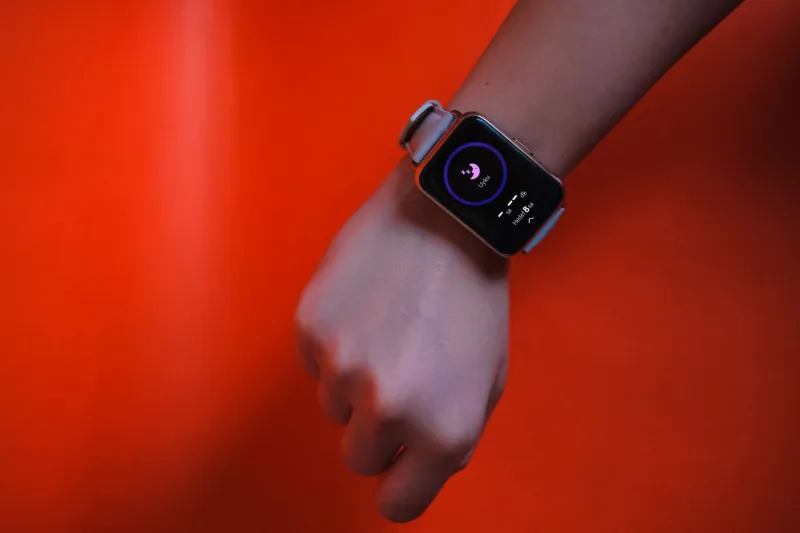
Modern smartwatches and fitness rings track several signals relevant to skin health: skin temperature variation during sleep, heart rate variability, and in some cases, galvanic skin response, which reflects moisture and sweat activity on the skin's surface.
"Skin temperature data can be genuinely useful," notes one dermatologist who reviews wearable research. "A sustained elevation on one limb compared with the other can flag inflammation — an infection, a flare of a condition like psoriasis, even early venous disease. But context matters enormously. A single warm night after a spicy dinner or a warm bedroom means nothing."
The key distinction is trend versus event. Devices are best at detecting change from your baseline over multiple nights. They are poor at diagnosing. A wearable can tell you that your left ankle is running warmer than usual for three nights straight; it cannot tell you whether that's cellulitis, a healing insect bite, or a sensor artifact caused by a loose band.
The Rise of the Mole-Mapping App
A parallel technology has grown even faster: smartphone applications that photograph, store, and compare images of moles over time. Some use artificial intelligence to flag lesions that look suspicious; others simply organize a personal photographic record that a dermatologist can later review.
Dermatologists broadly agree on where these tools fit. As a documentation tool — a digital mole map — they can be valuable, particularly for patients with many moles, a personal or family history of melanoma, or a dermatologist who has recommended periodic self-monitoring. Serial photographs make it far easier to spot a mole that is changing, which remains one of the most important warning signs of melanoma.
As a diagnostic tool, they fall short.
"The accuracy claims you see in app store listings don't always hold up in independent testing," says one researcher who has evaluated several AI triage apps. "Some apps miss melanomas that look atypical, and some generate false alarms that send worried patients racing to the office for benign lesions. Neither failure mode is trivial."
Where the Technology Fails Some Patients
A quieter problem has emerged as these tools scale: performance gaps across skin tones.
AI image models are trained on datasets, and dermatology photography has historically overrepresented light skin. Lesions on darker skin can present differently — melanomas on the palms, soles, or under the nails, for example, occur at meaningful rates in patients with skin of color, and many consumer apps were not built with these presentations in mind.
"If the training data doesn't include enough images from patients with darker skin, the algorithm's confidence is a mirage for those patients," one dermatologist explains. "A 'low risk' reading from an app is not reassurance if the model has never learned what your skin looks like."
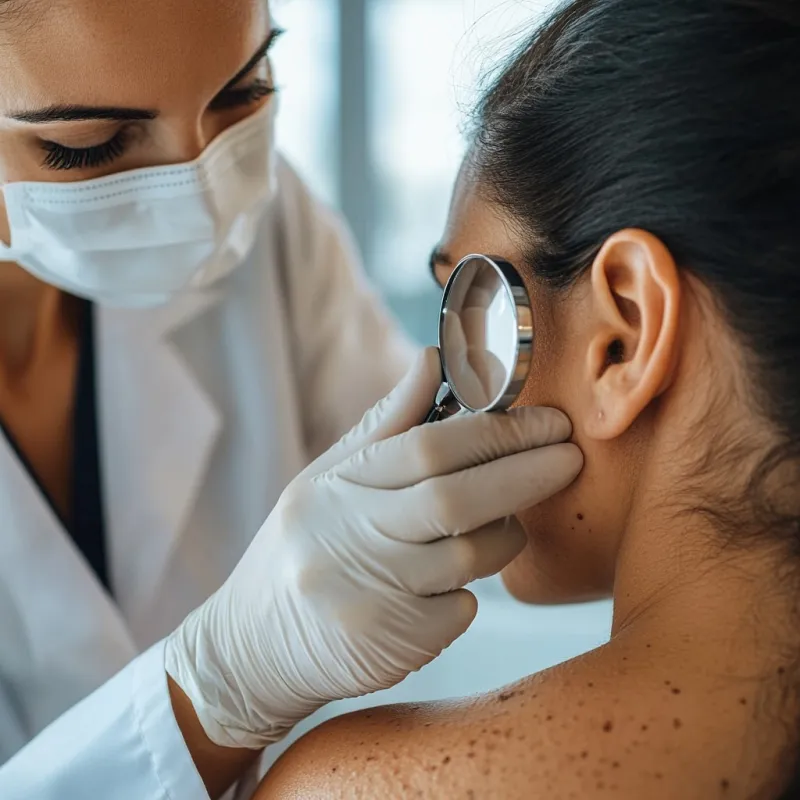
Atypical moles pose a second blind spot. Some dangerous lesions do not look dangerous — to an app or to an untrained eye. Conversely, many benign growths look alarming. Dermatologists use dermoscopy, magnified examination, and, when needed, biopsy precisely because visual triage alone is unreliable.
Which Digital Signals Warrant a Real Appointment
Dermatologists suggest treating consumer technology as a trigger for evaluation, not a substitute for one. Signals that should prompt a call to a board-certified dermatologist include:
- A mole that changes in size, shape, color, or elevation — the single most actionable signal a photo-tracking app can provide.
- A lesion that bleeds, itches persistently, or fails to heal, regardless of what any app says about its appearance.
- Sustained, one-sided skin temperature elevation on a wearable, especially when paired with redness, swelling, or pain.
- A new spot after age 30, or any spot that stands out from your other moles — the "ugly duckling" sign.
- Recurring data patterns — repeated alerts about the same area of skin — even if each individual alert seems minor.
If an app or watch tells you everything looks fine, that is not a clearance. It is an absence of detected evidence, which is not the same thing as evidence of absence.
Building a Sensible Digital Routine
For patients who want to use these tools well, dermatologists recommend a simple framework:
- Photograph, don't diagnose. Use mole-mapping apps to create a dated record. Take photos in consistent lighting, include a ruler or coin for scale, and capture hard-to-see areas with a partner's help.
- Respect the trend line. Pay attention to multi-day patterns in wearable data, not single readings.
- Keep your annual skin exam. Technology supplements professional screening; it does not replace it, particularly for anyone with risk factors like significant sun exposure history, tanning bed use, or a family history of skin cancer.
- Bring your data to the appointment. A dermatologist reviewing a six-month photo series or a temperature log has more to work with than one starting from scratch.
The Front Door, Not the House
Wearables and skin apps are reshaping who arrives at the dermatologist's door — and how early. Used thoughtfully, they shorten the distance between a subtle change and a professional evaluation, which in skin cancer detection can be measured in outcomes. Used carelessly, they offer false confidence or unnecessary alarm.
"The technology is a doorbell, not a doctor," as one dermatologist puts it. "It can tell you someone's at the door. It can't tell you who — and it definitely can't decide for you whether to answer."
For patients navigating an era when a diagnosis can begin on a wrist or in a glove compartment of saved screenshots, that distinction is the most important health signal of all.