Red Patches, Silver Scales, and Itchy Rashes: Telling Eczema, Psoriasis, and Their Look-Alikes Apart
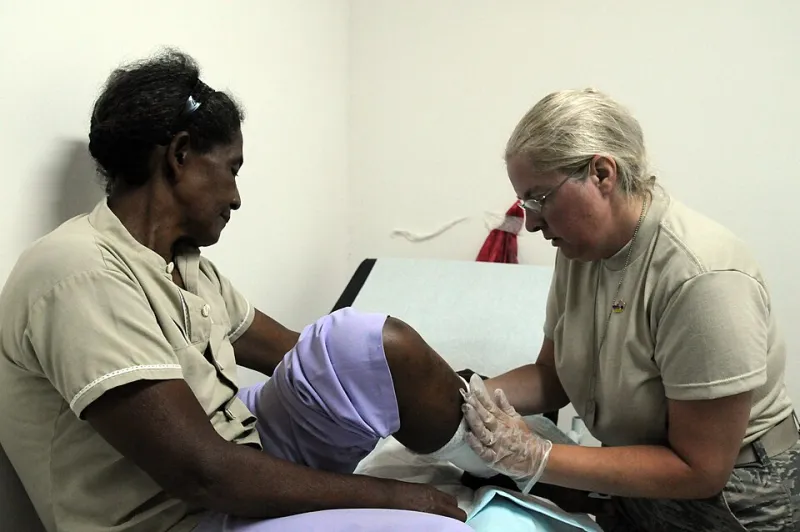
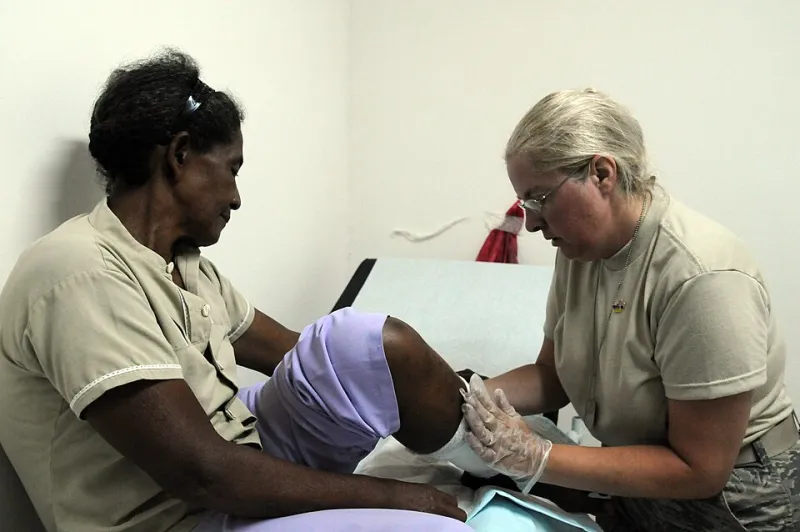
Photo: Petty Officer 1st Class Emmitt Hawks Jr., Public domain, via Wikimedia Commons
Why the Confusion Persists
Roughly 16 million American adults live with eczema and more than 7 million with psoriasis, and both conditions show up as red, inflamed patches of skin. To the untrained eye, they can look remarkably similar — which helps explain why patients frequently self-diagnose incorrectly, buy the wrong over-the-counter products, and lose months before receiving an accurate diagnosis.
Learning the distinguishing features does not replace a professional evaluation, but it empowers patients to describe what they see, track changes, and know when to escalate. Here is a practical roadmap to the conditions most often confused.
Eczema (Atopic Dermatitis)
What it looks like: Dry, intensely itchy patches that may be red, scaly, or — on darker skin tones — violet, ashen, or gray-brown. Skin may appear thickened from chronic scratching. In infants, eczema often appears on the cheeks and scalp; in adults, common sites include the creases of the elbows and knees, the hands, and the neck.
The signature clue: Itch is dominant, often severe enough to disrupt sleep. Eczema frequently occurs alongside asthma and seasonal allergies in what dermatologists call the atopic triad.
Psoriasis
What it looks like: Well-defined, raised plaques covered with silvery-white scales, most often on the elbows, knees, scalp, and lower back. On skin of color, plaques may appear purple or brownish with less visible scaling.
The signature clue: The borders are sharp and distinct — you can often trace the edge of a psoriasis plaque with a fingertip. Itching may be present but is usually milder than in eczema. Psoriasis can also affect the nails, causing pitting, and is associated with psoriatic arthritis, which causes joint stiffness and pain.
The Look-Alikes
- Contact dermatitis: A rash that appears where skin touched an allergen or irritant — think nickel jewelry, poison ivy, or a new detergent. Location tells the story.
- Seborrheic dermatitis: Greasy, yellowish scaling on the scalp, eyebrows, and around the nose. Often confused with scalp psoriasis.
- Tinea (ringworm): A fungal infection with a raised, scaly border and clearer skin in the center. It will not respond to eczema creams and requires antifungal treatment.
- Cutaneous lupus: Facial, sun-triggered patches that deserve prompt medical attention.
Self-Care Versus Specialist Referral
Mild, occasional flares of a previously diagnosed condition can often be managed with prescribed topical treatments, fragrance-free moisturizers, and trigger avoidance. But certain situations warrant a dermatologist's evaluation without delay:
- A new rash that has not improved after two to four weeks of basic care
- Widespread redness, peeling, or blistering
- Signs of infection: warmth, pus, swelling, or fever
- Joint pain or morning stiffness accompanying skin changes
- Any condition that affects sleep, work, or emotional well-being
When a diagnosis remains uncertain, dermatologists may perform a skin biopsy — a quick office procedure that examines a small tissue sample — or use dermoscopy to examine lesions in detail. An accurate diagnosis matters because treatments differ substantially across these conditions.
What Changed in 2025
The treatment landscape for chronic inflammatory skin disease has shifted dramatically. Biologic medications — injectable therapies that target specific immune pathways — have expanded for both atopic dermatitis and psoriasis, and 2025 has brought additional approvals and expanded indications, including options approved for younger pediatric populations and new oral therapies for moderate-to-severe eczema. For patients who once cycled through topical steroids with limited relief, these advances represent a genuine change in quality of life.
The essential takeaway: persistent, recurring, or unexplained skin changes deserve a real diagnosis, not guesswork. A board-certified dermatologist can distinguish between these conditions, identify look-alikes, and match patients to a treatment era that is finally moving quickly enough to help them.