The First Place Age Shows: Protecting and Treating the Skin on Your Hands
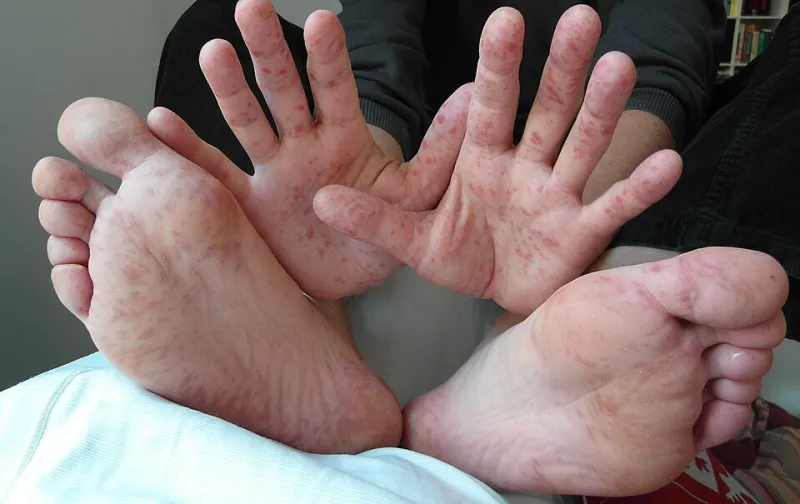
Photo: KlatschmohnAcker, CC BY-SA 3.0, via Wikimedia Commons
Ask a dermatologist where patients first notice their own aging, and the answer is often not the face. It is the backs of the hands — where decades of sun exposure, repeated washing, and gradual loss of volume converge to produce prominent veins, thinning skin, brown spots, and crepiness that no collar or sunscreen routine has protected.
Despite this, hand care remains one of the most neglected corners of skin health in the United States. Advocating for a change in that habit is worthwhile, because both prevention and treatment for hand aging are well established.
Why Hands Age Quickly
Three forces work against hand skin:
Ultraviolet exposure. The backs of the hands receive near-constant sun — while driving, gardening, walking, and running errands — yet are rarely covered by sunscreen. Chronic UV exposure drives pigmented spots (often called solar lentigines), degrades collagen, and increases skin cancer risk in an area where lesions are frequently overlooked.
Structural volume loss. With age, the fat padding over the back of the hands thins. Skin that was once smoothly draped over this padding begins to sag and reveal tendons and veins beneath.
Barrier stripping. Frequent handwashing, hand sanitizers, dishwashing, and occupational exposure strip lipids from the skin surface. For the many Americans whose jobs — healthcare, food service, childcare — require dozens of washes daily, chronic hand dermatitis becomes both a medical problem and an accelerant of visible aging.
Prevention That Actually Works
The preventive fundamentals are inexpensive and evidence-supported:
- Sunscreen every day on the backs of the hands. A broad-spectrum SPF 30 or higher, reapplied after washing, is the single most effective intervention. Keeping a tube in the car addresses the driving exposure most people overlook.
- Moisturize immediately after washing. Applying a thick cream or ointment-based moisturizer to damp skin traps moisture and rebuilds the barrier. Keep product at every sink.
- Choose gentle cleansers and lukewarm water. Antibacterial and heavily fragranced soaps are common triggers for irritant dermatitis.
- Wear gloves. For dishwashing, cleaning chemicals, and outdoor work — and for sun protection, UV-protective driving gloves are a practical option.
Treatments Dermatologists Recommend
Once changes appear, several in-office and prescription options have strong track records:
- Topical retinoids. Prescription retinoids can improve texture and pigmentation on the hands over months, though irritation requires gradual introduction and diligent moisturizing.
- Pigment-directed therapies. Solar lentigines respond well to cryotherapy, laser and light-based treatments, and prescription lightening agents.
- Volume restoration. Injectable fillers formulated for the hands, or collagen-stimulating treatments, restore padding beneath thinning skin and soften the appearance of veins and tendons.
A board-certified dermatologist can also evaluate any new or changing spot on the hands — an important step, as skin cancers in this location are common and sometimes mistaken for age spots.
A Routine Worth Adopting
Hand care need not be elaborate: sunscreen each morning, moisturizer after every wash, gloves for harsh conditions, and a periodic skin check that includes the hands and nails. The hands do a lifetime of work; giving their skin the same attention as the face is one of the simplest, most rewarding investments in long-term skin health.